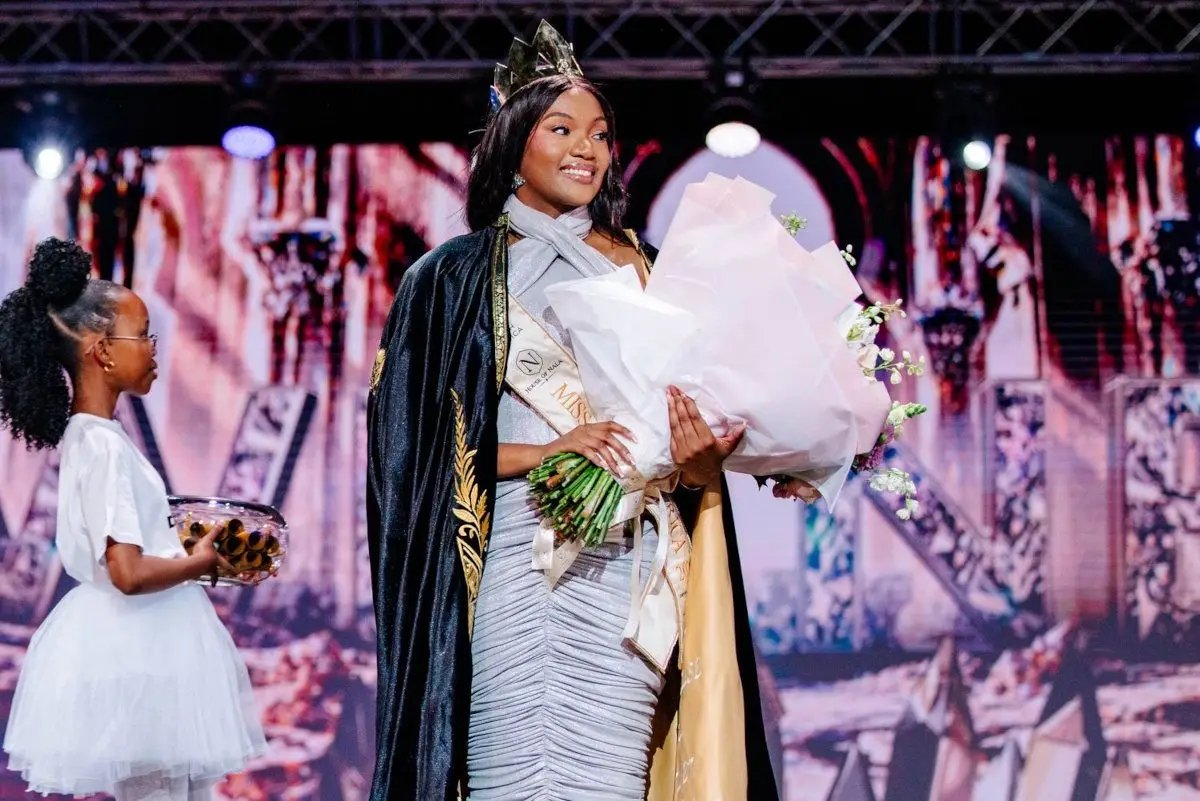
South Africa’s Miss South Africa 2026 pageant has been engulfed in controversy, with criticism extending far beyond the appearance of the crown presented to newly crowned queen Tiyani Makamu.
What should have been a glamorous celebration of South African women has instead prompted questions about the event’s organisation, production quality, contestants’ preparation and the direction of one of the country’s most recognisable beauty competitions.
READ | Not just a crown: Miss SA misses out on luxury car and penthouse
The backlash followed Saturday night’s finale at the Sandton Convention Centre, where 27-year-old Makamu was crowned ahead of 11 other finalists.
While the new queen has received congratulations, much of the public conversation has focused on what critics believe was a disappointing production.
The crown that stole the show
One of the biggest talking points was the gold-coloured crown placed on Makamu’s head.
The headpiece, which some social media users compared to a Burger King crown, was a significant departure from the Mowana diamond crown that had become closely associated with Miss South Africa.
The Mowana crown was designed and sponsored by Nungu Diamonds and had been worn by previous winners Natasha Vermaak, Mia Le Roux and outgoing queen Qhawekazi Mazaleni.
Nungu Diamonds subsequently confirmed that its sponsorship agreement with the Miss South Africa Organisation had not been renewed for 2026.
The jewellery company said it had offered the organisation permission to use the Mowana crown as a gesture of goodwill, but the decision not to use it rested with the pageant organisers.
The Miss South Africa Organisation later explained that the crown presented to Makamu was a temporary ceremonial crown, with the official design still being finalised.
Organisers said they wanted South Africans to participate in the unveiling of the permanent crown, but acknowledged that this intention should have been communicated before the finale.
The explanation did little to quieten criticism, with many questioning why the new queen’s crowning moment had not been planned around a finished crown.
Gowns, speeches and stage presentation under scrutiny
The criticism has also centred on the contestants’ presentation during the live event.
Viewers questioned why several finalists appeared to struggle with their gowns, with some reportedly stepping on their dresses while walking on stage.
There were also awkward moments during speeches, with contestants appearing to stumble over their words.
Questions were raised about microphone quality and whether the finalists could be heard clearly during their presentations.
The performances and sound production also attracted criticism, including concerns about the synchronisation of singer Zee Nxumalo’s performance with the orchestra.
These issues have prompted questions about the preparation and rehearsals leading up to the finale.
Miss South Africa co-chair and former winner Shudufhadzo Musida has said finalists received public-speaking preparation through the Gordon Institute of Business Science (GIBS), including training in presenting and pitching their ideas.
However, critics argue that the apparent difficulties on stage did not reflect the standard expected of a national pageant.
Sandton Convention Centre experience questioned
The event’s staging and audience experience have also come under fire.
Some attendees questioned the stage arrangement and visibility from parts of the venue, while the smaller screens positioned around the Sandton Convention Centre reportedly made it difficult for some guests to follow the action.
A mother who attended the event with her daughter, also shared an emotional account of her experience.
She said she paid R1 600 for tickets, expecting the glamour and organisation associated with a national beauty pageant.
Instead, she described the venue, sound and organisation as disappointing.
Her biggest heartbreak, however, was what the experience meant for her daughter, who had dreamed of one day competing in Miss South Africa.
In an open letter to the organisation, she said her daughter left the event feeling that her dream had been crushed and no longer wanted to be involved in the pageant.
She also questioned the apparent absence of the traditional question-and-answer segment, which she regarded as one of the most important opportunities for audiences to hear the contestants’ views and personalities.
Her complaint has added a more personal dimension to the backlash: for some families, the pageant is not simply an entertainment event but a platform representing years of ambition and aspiration.
Criticism goes beyond the winner
The reaction has not been limited to the crown or the production.
Some critics have questioned the judging outcome, although the organisation has defended the process and insisted that the panel made its decision independently.
The organisation said the title should recognise more than physical beauty, highlighting qualities such as intelligence, leadership, authenticity, compassion and communication skills.
It also said it remained firmly behind Makamu and the qualities that earned her the title.
Importantly, the criticism of the event should not be confused with criticism of the woman who won it.
Makamu did not organise the production, negotiate the crown sponsorship or determine the stage arrangements. She was one of 12 finalists and was selected by the judging panel.
Her achievement has consequently been overshadowed by questions that are largely directed at the organisation responsible for staging the competition.
What happened to the Miss South Africa brand?
The backlash has revived broader concerns about the direction of the competition following changes in its management.
The Motsepe Group acquired the Miss South Africa Organisation in July 2025, bringing a new chapter for the long-running pageant.
Some critics believe the competition has lost the prestige and production standards associated with earlier editions.
There have also been calls for experienced pageant professionals to be brought in to strengthen the organisation and restore public confidence.
One particularly outspoken critic has argued that the controversy surrounding the 2024 competition, including the debate over national identity and xenophobia, contributed to experienced professionals stepping away from the pageant.
That is an opinion rather than an established explanation for the current problems, but it reflects the wider frustration being expressed by some supporters.
There have also been suggestions that South Africa’s major pageant organisations should work together, sharing expertise and sponsorship opportunities to strengthen the country’s representation at international competitions.
Miss South Africa responds to the backlash
In a statement issued on Sunday, 15 November, the Miss South Africa Organisation acknowledged the disappointment and questions raised by members of the public.
It explained the temporary crown, defended the independent judging process and said it was proud of all 12 finalists.
The organisation also stood firmly behind Makamu, describing her as a woman who demonstrated the qualities required to represent South Africa.
However, its acknowledgement that the crown decision should have been communicated more clearly has not addressed all the concerns raised about the event’s production, staging and contestant preparation.
For a competition with a long history and a significant national profile, the expectations are high.
The 2026 finale was supposed to introduce South Africa to its new queen. Instead, the crown, cape, sound, gowns and organisation have become the dominant talking points.
The question now is whether the Miss South Africa Organisation can turn the criticism into meaningful changes before the next competition.
Time to bin the Miss South Africa pageant?
Let us know your thoughts by clicking on the comment banner below …